Showing posts with label Best fire alarm systems in india. Show all posts

Tuesday, 9 December 2014

Extended Coverage Sprinklers

Extended Coverage Sprinklers are intended for the protection of areas larger than those specified in standard installation rules and for specific light, ordinary, or extra hazard occupancies. Sprinklers are designed to protect ordinary hazard occupancies with a maximum coverage area.the standard distribution of sprinkler heads will not provide enough coverage. In these cases, extended coverage sprinkler heads can be installed to increase the spacing between heads. Extended coverage sprinklers have a water distribution radius of a little over 10 feet, so they can be spaced approximately 20 feet apart.                                                                   

Criteria for the location of sprinkler heads. First, sprinklers must be located so they are within the hot-gas layer that develops near the ceiling during a fire because activation occurs when the sprinkler head reaches a certain temperature. Second, they must be located so that the water that is discharged from the sprinkler is not disrupted or affected by construction elements such as beams, trusses, or soffits.The extralarge orifice produces the flows required to meet Light and Ordinary Hazard density requirements at lower pressures than standard orifice or large orifice sprinklers.The glass bulb operating element and special deflector characteristics meet the challenges of quick response extended coverage standards.During fire conditions, the heat-sensitive liquid in the glass bulb expands, causing the glass to shatter, releasing the pip cap and sealing spring assembly. Water flowing through the sprinkler orifice strikes the sprinkler deflector, forming a uniform spray pattern.
                                                             

Two Main Criteria For Location Of Sprinkler Heads

  • Because fire sprinklers are heat activated, sprinkler heads must be located high up on or near the ceiling.
  • Sprinkler heads must be unobstructed to provide maximum flow to the areas that need it. This means they cannot be blocked by beams, trusses, soffits, or any other elements of your building’s construction.                   

Tuesday, 2 December 2014

Digital Intelligent System

An Digital Intelligent Systems is a machine with an embedded, Internet-connected computer that has the capacity to gather and analyze data and communicate with other systems.  As this ongoing trend continues, many foresee a scenario known as the Internet of Things (IoT), in which objects, animals and people can all be provided with unique identifiers and the ability to automatically transfer data over a network without requiring human-to-human or human-to-computer interaction. digital Intelligent systems that can analyze digital information and sensory data, draw the right conclusions, and act on them in the digital or physical world are of rapidly growing importance.intelligent fire alarm system shall comply with requirements of  Standard for protected premises signaling systems. The system shall be electrically supervised and monitor the integrity of all conductors.Fire Finder system operates with high-performance devices and systems.
                                                                     
 Fire Finder system Includes:

• Notification devices
• FirePrint intelligent fire detectors
• Special hazards extinguishing systems
• Integrated digital emergency voice evacuation system
• Multiple FireFinder Networking System (compatible with MXL)
• Network Command and Control (NCC) and Wide Area Network Systems (NCCWAN)
                                                          

Thursday, 20 November 2014

Residential Sprinklers

Residential fire sprinklers in all new one-and two-family dwellings and townhouse construc­tion statewide. For many years, installation of fire sprinkler systems has only been required in office buildings and multi-family dwellings. These sprinkler systems are proven to save lives and extinguish fires. Despite the statistics, home fire sprinklers have yet to become code-mandated in new-home construction, and few homeowners who have the option choose to include this life-saving investment in their home.A residential sprinkler system is designed to use just enough water to control the fire. Typically one sprinkler head discharges 38-40 litres of water a minute compared to a firefighter's hose at 1000+ litres a minute. This minimises water damage and a room protected by sprinklers can often be back in use within a couple of hours.Residential fire sprinklers are not expensive.The sprinklers themselves are small, neat and blend in with the decor. The heads are connected through a system of pipes to the water mains or an alternative secure source of water. Most rooms require only two sprinkler heads to afford complete protection. Residential Sprinklers for Fire Protection Service . fire sprinklers be included a standard feature in all new homes. 


Multiple Occupation Of Residential sprinklers Includes:

Apartments
Dormitories
Blocks of flats
Nursing homes
Boarding houses
Residential homes
Aged persons homes
Residential rehabilitation accommodation
                                                         

Sunday, 16 November 2014

Deluge Fixed Fire Protection System

Deluge system is designed to protect high hazard areas containing a severe fuel hazard with a high heat release rate by bringing a large number of open sprayers into action simultaneously in the event of a fire. Deluge valve system comprises of a control valve, a sprinkler operated detection system and a dedicated water supply system. For small or confined high hazard risk areas, Multiple Controls can be used instead of sprinklers. Deluge system is similar to a pre-action system except the sprinkler heads are open and the pipe is not pressurized with air. Deluge systems are connected to a water supply through a deluge valve that is opened by the operation of a smoke or heat detection system. Deluge systems are used in the protection of large Aircraft Hangers as one primary means of fire protection.                                                    

Deluge fire sprinkler systems are used where special hazards create a concern for rapid fire spread. These systems provide a simultaneous application of water over the entire hazard to ensure fast and effective suppression of the fire. Water is not present in the piping until the deluge valve is tripped, reducing the risk of leakage or damage to unseen areas of the building. deluge fire sprinkler  system is to quickly wet down an entire hazard area to prevent a fire from spreading. They are usually used in facilities that contain hazardous materials such as: flammable liquids, chemicals, and explosives.Deluge pipe fire sprinkler systems feature open-type sprinkler heads attached to a dry pipe that is connected to a main water supply. Using an innovative detection system that recognizes smoke or heat, this fire suppression installation activates a valve that releases water to all sprinklers.                                      
Applications Of Deluge System

Libraries
Archives
Aircraft Hangars
Computer Rooms
Refrigerated Areas
Flammable Liquid Handling
Storage Areas for Valuable Artifacts
High-Hazard Installations Using Water as Extinguishing Agent                     

Wednesday, 12 November 2014

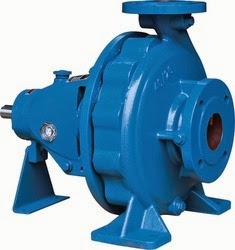
End Suction Fire Pumps

End suction fire pumps are specifically designed to significantly reduce fire pump space requirements. Available with either an electric motor or diesel engine driver, the pumps can address a wide range of fire pump applications. Aurora’s end suction fire pumps feature a back pullout design for easy disassembly and maintenance.End Suction Fire Pump deploy a heavy-duty bearing frame to provide long and reliable service in an over-hung impeller design. The end-suction format eliminates the design layout constraints imposed by horizontal split-case pump configurations. Available at a very economical market rates.The approval demonstrates that an independent assessment has been made of the Fire Pump Manufacturer's packages and processes and that they conform to industry standards.End suction pumps are the most common configuration for centrifugal pumps, and the least expensive configuration in many cases. A huge variation of sizes, materials of construction, and designs are offered by manufacturers to handle everything from water at ambient temperature to high pressure and high temperature viscous oils, abrasive slurries, and corrosive chemicals.The end suction pump is a suction pressure pump with its suction nozzle on the opposite side of the casing from the stuffing box, with the face of the suction nozzle perpendicular to the longitudinal axis of the shaft.                               
                          

End Suction Fire Pumps are available in two configurations frame mounted or close-coupled, which can be flanged or threaded. These pumps ably bring Patterson’s rugged performance and reliability to existing applications or new installations.Fire Pump approvals are of course essential for the peace of mind of those that build, operate or use buildings.end suction centrifugal fire pumps with appropriate fittings for providing water supply to fire protection systems in buildings, plants and yards.                 


Features and Benefits

Frame-Mounted Design
Small Footprint Ideal for Retrofit
Self-venting design eliminates the need for automatic air release valve.
Hydraulically balanced impeller extends bearing life and assures smoother operation.
Available in electric motor or diesel engine driven configuration.
Rear pullout design supplied as standard with spacer coupling.
Top centerline discharge with foot supported casing.

           
Applications

Plumbing
Pressure Boosting
Industrial
Water Utility
Wastewater
Agriculture

Thursday, 6 November 2014

Voice Evacuation System

Voice Evacuation System is a multi-function supervised paging, messaging, background music delivery and emergency voice evacuation system with 24 VDC battery backup.it is also like a fire Warning System.Voice Evacuation Systems provide a tremendous advantage in an emergency situation. And they are simpleto use, making them even more effective. The Voice-Plus systems deploy clear and loud evacuation instructions in up to four-minute segments.Voice Evacuation and Messaging system is designed for distributed intelligence and ultimate survivability.it can utilice pre-recorded emergency voice messages,warning that emergency has been reported.Voice Evacuation System operates in conjunction with the Fire Alarm Control Panel (FACP) in a building to provide automatic response to life safety emergencies.
                                                       

Requirements For Voice Alarm Systems
  • A voice alarm system, which is used with fire alarm panels, provides a manually or automatically activated acoustic fire alarm signal in the building.
  • A fire alarm system with voice alarm requires a voice system controller for the control of alarm signals and fire alarm announcements. 
  • The voice alarm system can be a seperate unit or a physical combination with the fire alarm panel.

Features Of Voice Alarm Systems
  • Complete range
  • Extensive built-in functionality
  • State-of-the-art audio technology
  • Reliable operation
  • Easy to install
  • Economic solution for many applications                                                


Applications Of Voice Alarm Systems
  • Integration of analog and addressable hardwired circuits allows system engineers to customize panels and maximize efficiency for a given application.
  • Up to five field-programmable messages
  • Expandable to 50 watts

Wednesday, 8 October 2014

Safety Fire Alarm System in india

The Alarm System has varied applications and is used across many industries for security purpose.The Fire Alarm panel is the component, the hub of the system monitoring inputs and system integrity, control outputs and relays information.Primary Power supply Commonly the non-switched 120 Volt Alternating Current source supplied from a commercial power utility. In non-residential applications, a branch circuit is dedicated to the fire alarm system and its constituents. "Dedicated branch circuits" should not be confused with"Individual branch circuits" which supply energy to a single appliance.Secondary (backup) Power supplies component commonly sealed, lead-acid storage batteries or other emergency sources including generators, is used to supply energy in the event of a primary power failure.Initiating Devices component acts as input to the fire alarm control unit and are either manually or automatically activated.


Fire detectors must be coupled with alarms. Alarm systems provide notice to at least the building occupants and usually transmit a signal to a staffed monitoring station either on or off site. In some cases, alarms may go directly to the fire department, although in most locations this is no longer the typical approach.